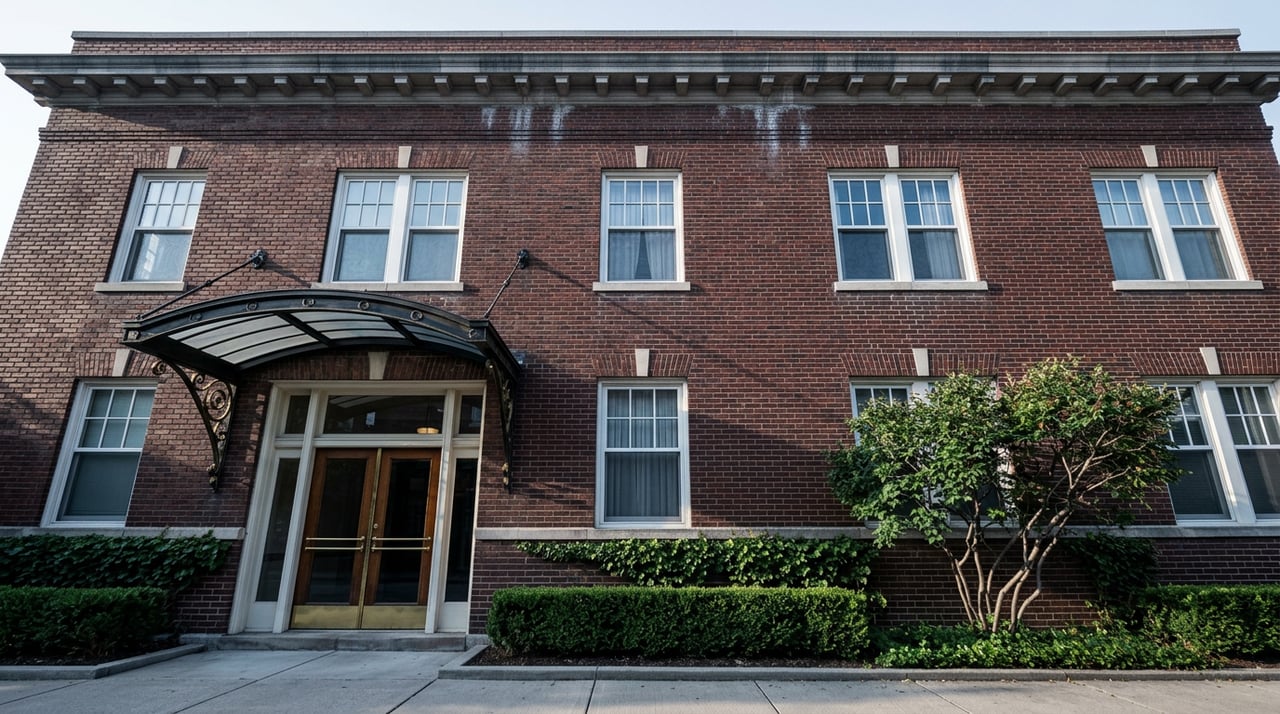
A New Canaan home inspection report runs long. It notes the age of the roof, the amperage of the electrical panel, hairline cracks in the foundation, the furnace's remaining service life. It is thorough on nearly every system a house has.
It says nothing about the well. It says nothing about the septic tank.
That is not an oversight. A standard home inspection in Connecticut is not built to test either system, and in a town where a meaningful share of the housing stock sits on private water and private waste disposal, that gap matters more than it does almost anywhere else in Fairfield County.
The Sewer Line Has an Edge, and Most of the Town Sits Past It
According to a report by the New Canaan Sentinel, New Canaan has a sanitary sewer system, and it is older than most residents assume. The first pipes went into the ground in 1907, according to the town's own engineering staff, and the wastewater treatment plant on the Fivemile River got its last major upgrade in 1999. Today the system runs through more than 30 miles of pipe and 900-plus manholes.
That system covers the central sections of town. It was never extended everywhere, and it was never meant to be. The large-lot properties that pull families out of apartments in the city or smaller homes in Westchester for the sake of space and privacy are, by default rather than preference, running on a private well and a septic field.
That distinction changes what "home inspection" needs to mean before you make an offer.
What the Inspection Covers, and What It Doesn't
A general home inspector walks the structure, the systems, the roof, the mechanicals. Septic and well are typically outside that scope. If you want to know whether the leaching field still has capacity, or whether the well can support the household's peak demand, that requires a separate specialist: a licensed septic inspector for one, a well contractor for the other.
The stakes can be substantial. A failing septic system can cost between $15,000 and $40,000 to replace, and that range is large enough to derail a deal outright rather than get negotiated down. Wells carry their own costs. Radon mitigation, a common finding when a well pulls from bedrock, runs $800 to $2,500 for a sub-slab depressurization system.
None of that shows up automatically. It shows up only if someone asks for it.
The Law Says One Thing, Your Lender Says Another
Here is the part that surprises most buyers, and the part that changes who is actually protected.
The Connecticut Department of Public Health says an existing well does not have to be tested as a condition of selling a home. Connecticut General Statutes § 19a-37(d) requires the owner to notify the buyer that information about well testing is available on the state Department of Public Health's website. Failing to give that notice does not even invalidate the sale.
The standard Connecticut Realtors' Septic/Well Rider gives buyers the right to inspect. That rider spells out who pays for pumping, who pays to retrofit a septic riser if one is missing, and how many days a buyer has to walk away if the system fails inspection.
The Connecticut Department of Public Health says water tests during home purchases are usually required by the bank providing the mortgage. A cash buyer has no lender to require that test. The protection only exists if the cash buyer's contract asks for a well-testing contingency.
| Protection | Required by CT law | Automatic for an all-cash buyer |
|---|---|---|
| Well water quality test | No | No, unless written into the contract |
| Seller notice re: DPH well testing info | Yes | Yes (this one is statutory) |
The buyer with the most apparent leverage in a competitive New Canaan offer, the one who can close fast and skip the mortgage contingency, is also the one most exposed to a bad well or a failed leach field unless they build the same protections back in themselves.
Three Renovations That Reopen the Septic Question
New Canaan's health department does not treat septic capacity as a one-time check at construction. Under the town's health code, several common post-closing projects trigger a fresh septic evaluation, even when the home's footprint isn't changing:
- Finishing an attic or basement into living space
- Adding a pool, pool house, garage, or shed
- Installing a garbage disposal, which requires 250 additional gallons of septic tank storage under state code
Anyone planning to buy in New Canaan and then finish a basement or add a pool in year two should know the septic question doesn't end at closing. It reopens the moment the permit application goes in.
What Changes on October 1
A 2026 report by the Connecticut General Assembly's Office of Legislative Research describes two new Connecticut laws taking effect today, October 1, 2026, that touch private well disclosure directly.
One eliminates the requirement that the state Department of Public Health get commissioner-level approval before releasing a well's test results, and it expands who can request those results to include the owner of a neighboring property that shares the same well or sits next to one. Practically, that means water quality problems on one well become more visible to the immediate neighborhood, not just the well's owner.
The second replaces an older, broader contaminant-threshold notification rule with a specific schedule of PFAS and unregulated contaminants that DPH will now be required to publish and update. For a house on a well, that's a more precise, more current list of what a serious test should screen for going forward.
Neither law makes well testing mandatory at sale. Both make the information around a well's history slightly more visible and slightly more current than it was a month ago.
Before You Waive Anything
- Ask when the well and septic system were last tested, and by whom. New Canaan's Land Use Health Department keeps property files that are viewable in person at Town Hall or digitally through the town's records system.
- If you're closing without a mortgage, write the septic and well contingency into the contract yourself. Nothing about paying cash removes the risk. It only removes the party who would have insisted on checking.
- If a renovation is already on your mind, price the septic retest into your first-year budget rather than your fifth. An addition, a pool, or a finished basement can all force the question back open.
- Get the actual test results, not a seller's summary of them. Bacteria, nitrate, arsenic, and uranium are the standard panel; radon in water is worth adding for any home on a well.
A Few Questions Before You Waive Anything
Does a septic test come with the standard home inspection? No. It's a separate inspection performed by a licensed septic contractor, and it needs to be requested and scheduled on its own.
Well and septic questions are exactly the kind of detail that gets skipped when an offer needs to move fast, and they're exactly the kind of detail I build into every New Canaan contract before a client waives anything they didn't mean to. If you're weighing a property outside the village center, Khuzama "Kay" DaCosta can walk you through what the well and septic history actually says before you're the one holding the risk.
This article is general information, not legal, tax or financial advice. Consult a qualified professional about your situation.